PM Modi and USA: A Tryst of Generosity
The 2019 Lok Sabha elections were conducted at a decisive moment in India’s history. As the 1.3 billion people-strong nation steadies its march towards the US$5-trillion GDP-mark, its yearning for its place in the world are coming to the fore. Leading the way, the government of Prime Minister Narendra Modi has effectively shifted India from its historical fixation with ‘strategic autonomy’....a spectre of its nonaligned past, to ‘strategic alignment’. The government has redefined autonomy “as an objective that is achievable through strengthened partnerships instead of avoiding partnerships.”

Figure 1: India’s PM Narendra Modi (left)
in a meet with US President Donald Trump (right)
Under Prime Minister Modi, India-US bilateral trade of goods and services have crossed the historic goal of US$100 billion which was set during the term of President Barack Obama (US$126.2 billion as of 2017). Either side’s FDI witnessed double-digit growth in 2017—with the US FDI in India rising by 15.1% and India’s FDI in the US gushing by 11.5%.

Figure 2: India–US Bilateral Trade and FDI
Importantly, the Modi government rose up defence trade and force interoperability with the US. One may opine that this has largely stemmed from a convergence of interests with regards to a “free and open” Indo-Pacific and a solidarity on the US being India’s “most important partner” amid 75 per cent of New Delhi’s strategic community.
Indeed, India-US defence trade has spiked from US$1 billion in 2008, to over US$18 billion today. Between 2013-17, largely coinciding with Modi’s first term....US arms exports to India saw a staggering hike of over 550 per cent, making America, India’s second-largest arms supplier. As a result of this partnerships, India now operates the second-largest C-17 Globemaster and P-8 Poseidon fleets in the world.
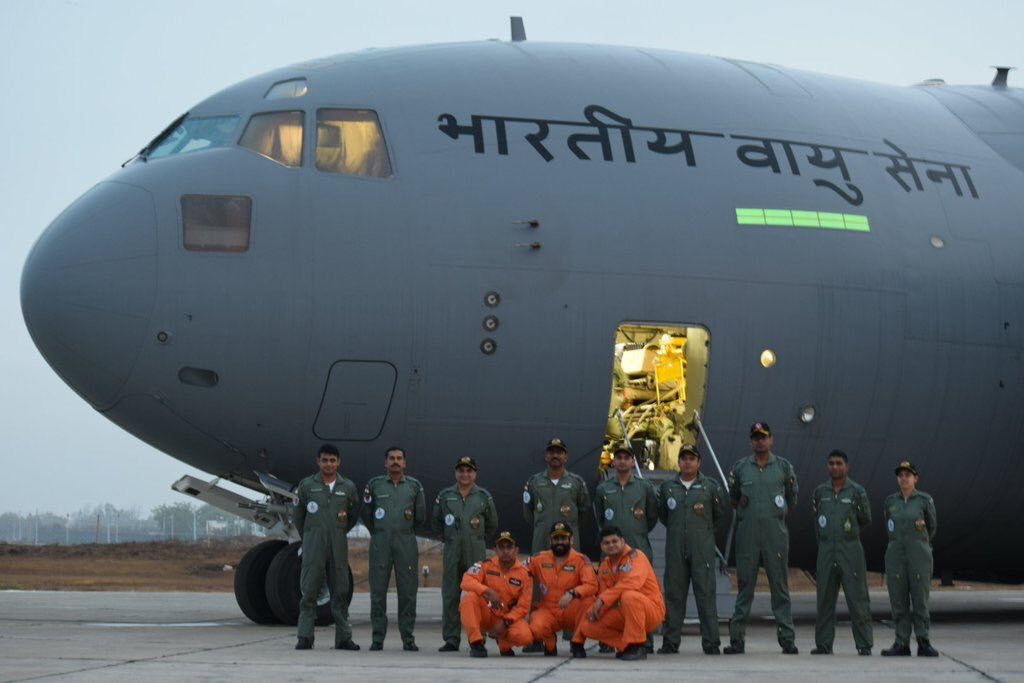

Figure 3: C-17 Globemaster and P-8 Poseidon
In 2018, another defence foundational consensus, the Communications Compatibility and Security Agreement (COMCASA) was inked to “facilitate access to advanced defence systems and enable India to optimally exploit its existing U.S. origin platforms.”
Seeking more institutional touch-points could therefore be effective as Indo-US relations have generally also been overtly reliant on a top-down framework. As Cara Abercrombie— former Deputy Assistant Secretary of Defence for South and Southeast Asia, has noted, “Until and unless the U.S. and India routinely engage one another at all levels within government—from the strategic to the tactical—and build habits of cooperation, the relationship will not mature.”
The China factor will be a principal factor in the US–India Partnerships for some years to come. The February summit excluded any reference to China beyond the now-expected insinuation to it in the context of the wider Indo-Pacific. Despite no official comment from Beijing, Chinese observers were wide awake to the visit’s meaning for China in the Indo-Pacific. The US and India signalled that they would expand their reliance on each other to counter China regionally and globally, even at the risk of giving too central a place to this single consideration.
Trump’s visit to India was a significant reassertion of the US–India strategic partnership. This blueprint for mutual cooperation will be a pivotal foundation as the two countries face the similar challenge of the growing spread of the coronavirus on their territory.


Comments
Post a Comment
Share your views